MICRAVA AB Tanks: Stop Bubbles, Fill Electrolyte Precisely
During the lithium battery manufacturing process, electrolyte must be precisely injected into the cell. The electrolyte contains metal ions that conduct electrical energy, so the quality of the electrolyte and the accuracy of the injection volume directly determine the battery's performance. In current battery production processes, gases inevitably dissolve in the electrolyte during production, transportation, and use. During the electrolyte filling process, sudden changes in pressure can generate numerous bubbles within the filling pipeline. This often leads to issues such as air bubbles, dripping, or residual liquid in the inlet and outlet pipes, resulting in unstable filling precision. Moreover, excessive bubbles in the injected electrolyte significantly affect battery capacity and cycle life, ultimately reducing cells quality.
At this point, MICRAVA introduces an economical and practical solution for removing bubble formation before battery electrolyte filling.
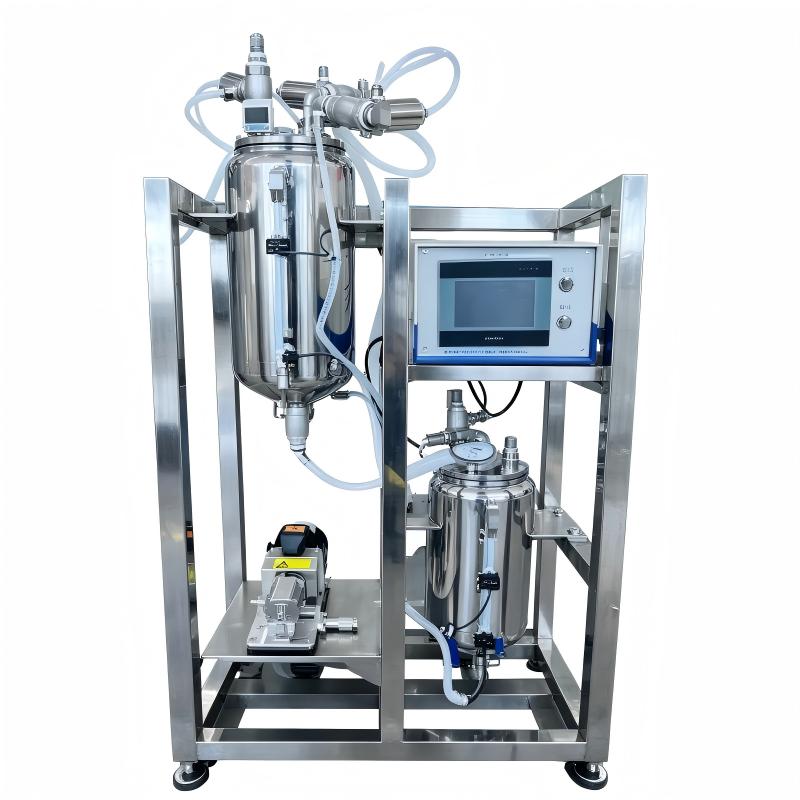
This method uses two stainless steel electrolyte buffer tanks, labeled A and B. During battery filling, electrolyte from the main tank is pressurized with nitrogen into Tank A. Once the electrolyte reaches the desired preset level, we vacuumed and let tank A stand, etc, removing any gas generated during the nitrogen pressurization via a vacuum source. After standing is complete, the vacuum valve is closed, and the ball valve connecting Tanks A and B is opened. The settled electrolyte in Tank A then flows naturally into Tank B. Tank B should remain at atmospheric pressure before being connected to the filling pump. This approach effectively suppresses and eliminates bubble formation in the electrolyte.
This is an automatic replenishment and physical stirring type electrolyte vacuum degassing circulation tank system. It includes a storage unit, vacuum assist unit, filling device A, filling device B, vacuum stirring unit, filling pump, and filling pump controller—all connected and controlled by a main controller. Through coordinated operation of the vacuum stirring unit, storage unit, and vacuum assist unit, the electrolyte undergoes degassing treatment. The treated electrolyte is then directed into filling devices A and B. Filling device A delivers precise amounts of electrolyte into the filling component via the filling pump. When the electrolyte level in filling device A drops below the minimum threshold, filling device B automatically supplies additional electrolyte, enabling continuous feeding to the filling component. For cleaning, simply connect the liquid interface to a cleaning solution.
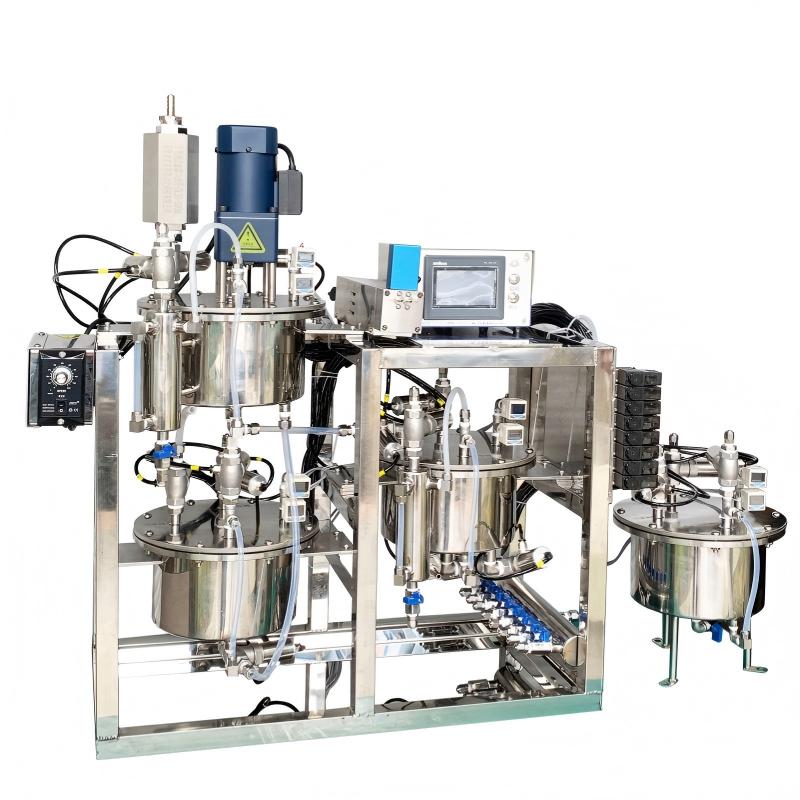
MICRAVA has always been committed to providing advanced solutions for micro-liter, milli-liter, and ultra-precise fluid handling applications including filling, dispensing, spraying, and sampling. To date, we have established long-term partnerships with over 1,000 manufacturers worldwide across industries such as biomedicine, battery production, chemical formulation, dairy, and cosmetics. Through years of dedicated effort, continuous innovation, and R&D, we have evolved our ceramic metering pump products from single-function to diversified offerings. We have successively developed a comprehensive range of products including ceramic pumps, ceramic transfer valves, distribution valves,liquid dispensing system and pulse-free models.
Please don't hesistate to contact us to find your electrolyte filling solutions.