Ceramic Dispensing Pump Principles & Materials
Microscopic precision filling and injection are widely used, especially in biomedical, microelectronics, heat pipe injection, battery injection, chemical reagent, etc. To fully enhance the quality and performance of the products and ensure the consistency, stability and repeatability of the filling volume, we have conducted a lot of research and development in this field over the years, and have obtained many valuable experiences and stable injection pump products.
The core of the injection pump lies in the valve core and control technology. The valve core is the heart of the injection pump and is an important component of ceramic injection pumps. Its composition has a significant impact on the performance, quality, cost and production of the injection pump.
| Characteristic Items | Alumina(Al2O3) | Zirconia(ZrO2) | Silicon Carbide(SiC) | Silicon Nitride(Si3N4) | |
| Color | White | White | Black | Grey Black | |
| Purity | % | 99.7 | 3Y-TZP | — | — |
| Application | Corrosion resistant Wear-Resistant | Corrosion resistant Wear-Resistant | Wear-Resistant Heat-resistant Corrosion-resistant | Wear-Resistant Heat-resistant Corrosion-resistant | |
| Density | Kg/m3×103 | 3.93 | 6 | 3.2 | 3.25 |
| Water Absorption | % | 0 | 0 | 0 | 0 |
| HV Hardness | GPa | 18 | 13.2 | 22 | 16 |
| Flexural Strength | MPa | 390 | 1200 | 400 | 700 |
| Compressive Strength | MPa | 2300 | 3500 | — | 3800 |
| Elastic Modulus | GPa | 375 | 200 | 430 | 290 |
| Fracture Strength | MPa/m | 4 | 7 | 4 | 5 |
| Coefficient of Thermal Expansion | ×10-6/℃ | 7 | 10 | 3.7 | 2.6 |
| Thermal Conductivity | W/(m·K) | 33 | 3 | 60 | 20 |
| Maximum Operating Temperature | ℃ | 1600 | 200 | — | — |
| Thermal Shock Resistance | ℃ | 200 | 200 | 400 | 550 |
| Dielectric Strength | V/m×106 | 18 | 11 | — | — |
| Dielectric Constant | — | 9.7 | 33 | — | — |
| Dielectric Loss Factor | ×10-4 | 10.06 | 520 | — | — |
| Nitric Acid | Wt Loss mg/cm2/D | 0.15 | 0.1 | 0.02 | 0.05 |
| Sulfuric Acid | Wt Loss mg/cm2/D | 0.04 | 0.5 | 0.009 | 0.2 |
| Aluminum Hydroxide | Wt Loss mg/cm2/D | — | 1 | 0.01 | 0.3 |
As the heart of the injection pump, the valve core must first ensure the selection of the material, which should have excellent properties such as wear resistance, corrosion resistance, high temperature resistance, hygiene and environmental protection, and anti-chemical reaction. Currently, through various research and tests, we have proved that materials such as high toughness alumina, zirconia, silicon nitride, and silicon carbide can be used to manufacture the valve core, which are the preferred pump valve materials for injection pumps according to the application requirements of different occasions. The ceramic valve core is formed by precisely grinding the ceramic piston and ceramic sleeve together.
The production process is very strict, and the valve core's coaxiality, smoothness and other parameters need to be fully inspected in each process. The final fit between the ceramic piston and the ceramic sleeve needs to reach 1 micron to ensure the airtightness of the valve core cavity, no core jamming, no liquid leakage, and no dust.
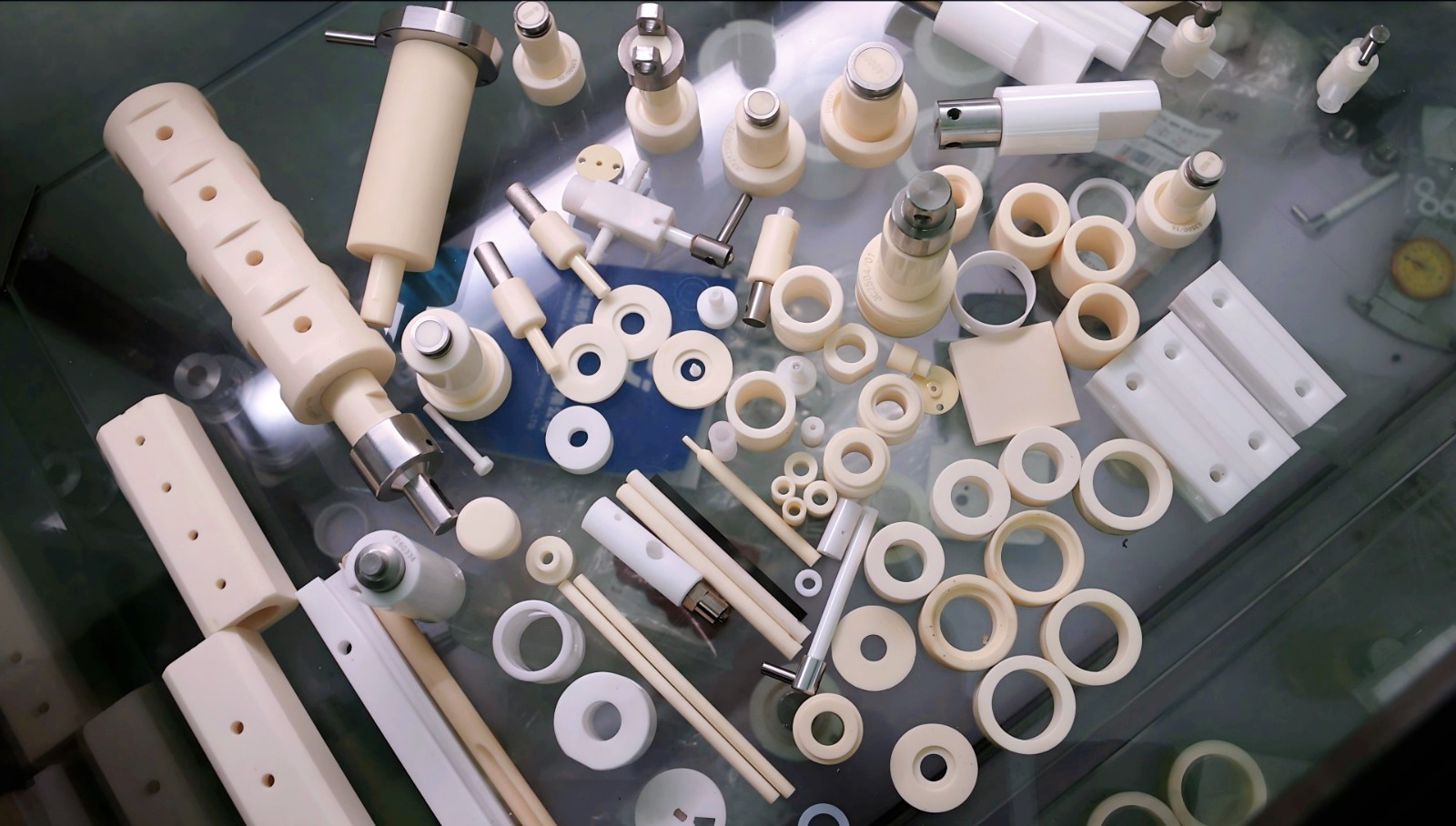
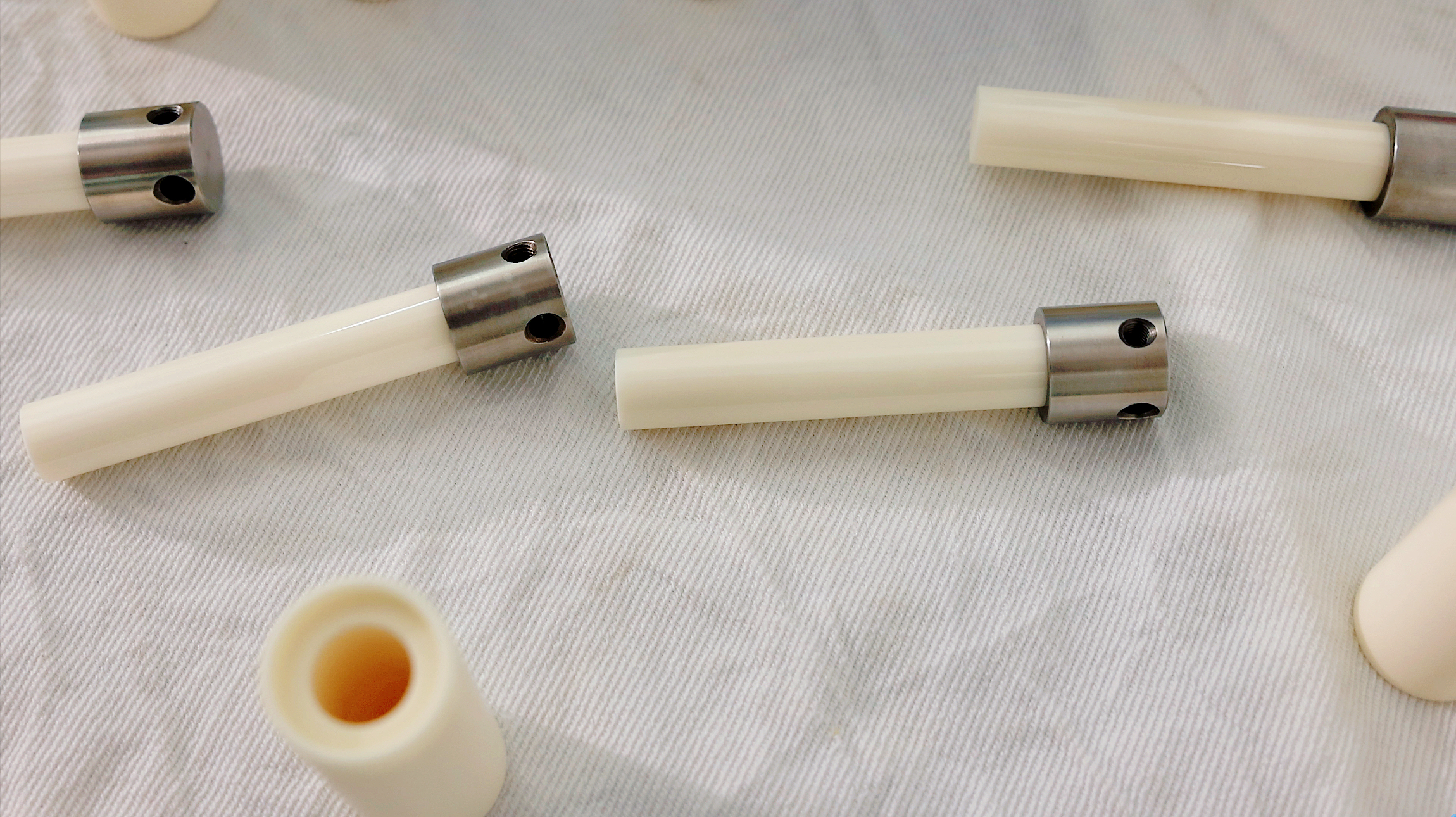
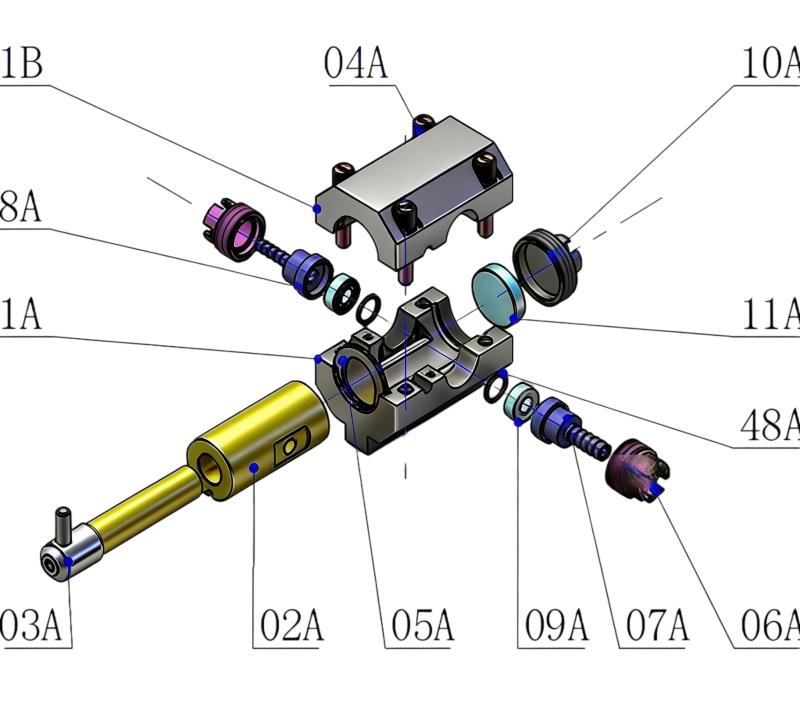
The ceramic injection pump uses the ceramic piston and ceramic sleeve to form a relatively sealed cavity. Through motor transmission, it rotates clockwise in a reciprocating motion to complete the precise suction and discharge of the fluid, thereby achieving the purpose of precise metering injection.
The main components and functions of the injection pump:
Valve core: Ceramic material, the precise pairing processing of ceramic piston and ceramic sleeve ensures the airtightness of the cavity, no core jamming, no liquid leakage, corrosion resistance, and wear resistance.
Body: SUS316 stainless steel material.
Sealing parts: Static sealing, using PTFE material, which is stable and resistant to chemical reactions.
Transmission: Stepper motor, universal bearing.
The following ceramic, stainless steel, and PTFE materials are environmentally friendly and hygienic, and can be used for most corrosive liquid contacts, playing a role in anti-chemical reaction.
If used for the inlet and outlet of fluids such as hydrochloric acid, a PTFE material pipe should be selected.
| Wetted Materials | Name of Material | Materials |
| 03A | Ceramic Piston | Ceramic |
| 02A | Ceramic Sleeve | Ceramic |
| 07A | Inlet and Outlet Ports | SUS316 |
| 09A | Left and Right Sealing | PTFE |
| 11A | Front Seal Cap | PTFE |
For more information, please visit our website: www.micrava.com